How to Stand Out in Flight Attendant Job Applications
Prepare for your cabin crew career with expert tips on flight attendant applications, interviews, skills, grooming, and training from Vision Institute of Aviation.
The best way to stand out in a flight attendant job application is by presenting yourself as a complete aviation professional. This includes showcasing customer service experience, communication skills, problem-solving abilities, and readiness to handle passenger safety responsibilities.
Every year, thousands of candidates in India apply for flight attendant and cabin crew positions with domestic and international airlines. While many applicants meet the basic eligibility requirements, only candidates who demonstrate confidence, professionalism, adaptability, and a strong service mindset move ahead in the selection process.
With increasing competition in aviation recruitment, submitting a basic application is no longer enough. Candidates need to understand what airlines look for and prepare their applications accordingly.
This guide explains how aspiring cabin crew professionals can improve their flight attendant job applications and increase their chances of selection.
What Do Airlines Look for in a Flight Attendant Candidate?
A flight attendant, also known as cabin crew, is responsible for passenger safety, comfort, and service during flights. The role requires much more than serving meals or assisting passengers. Cabin crew members are trained aviation professionals who handle safety demonstrations, emergency situations, passenger queries, and customer service responsibilities.
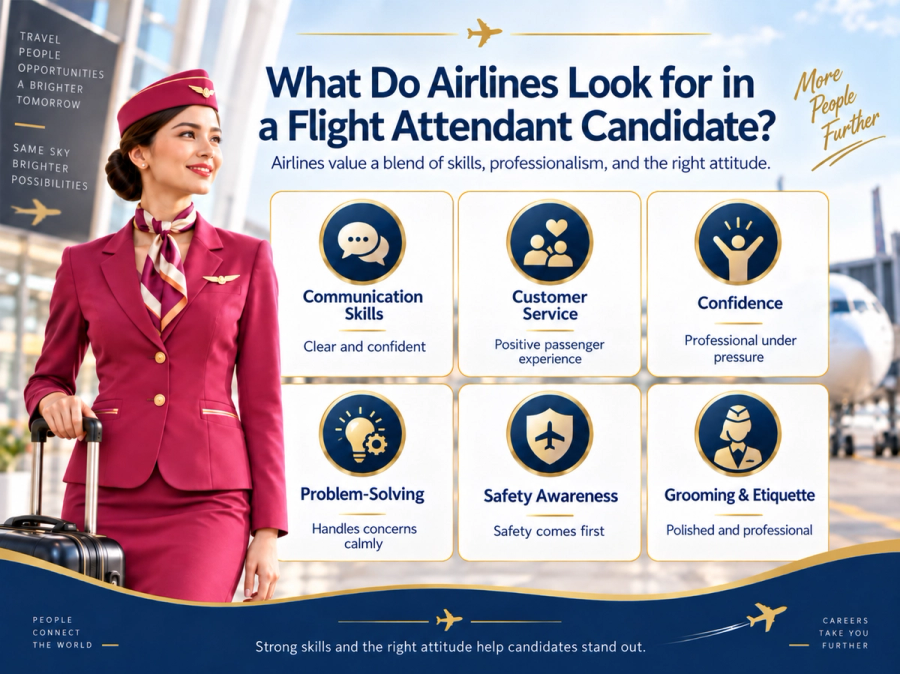
Airlines generally look for candidates who have a combination of technical knowledge, soft skills, and the right professional attitude. Important skills include:
- Communication Skills: Cabin crew members interact with passengers from different backgrounds and must communicate clearly, politely, and confidently.
- Customer Service Skills: Flight attendants represent the airline brand and are responsible for creating a positive passenger experience.
- Confidence: Confidence helps candidates perform better during interviews and handle onboard situations professionally.
- Problem-Solving Ability: Cabin crew members must be able to manage unexpected passenger concerns and find suitable solutions calmly.
- Safety Awareness: Passenger safety is the primary responsibility of cabin crew, making knowledge of safety procedures essential.
- Grooming and Professional Etiquette: A professional appearance, positive body language, and proper etiquette help create a strong first impression.
Strong communication, adaptability, customer service ability, and knowledge of safety procedures are among the important skills expected from cabin crew candidates.
What Makes a Flight Attendant Application Stand Out?
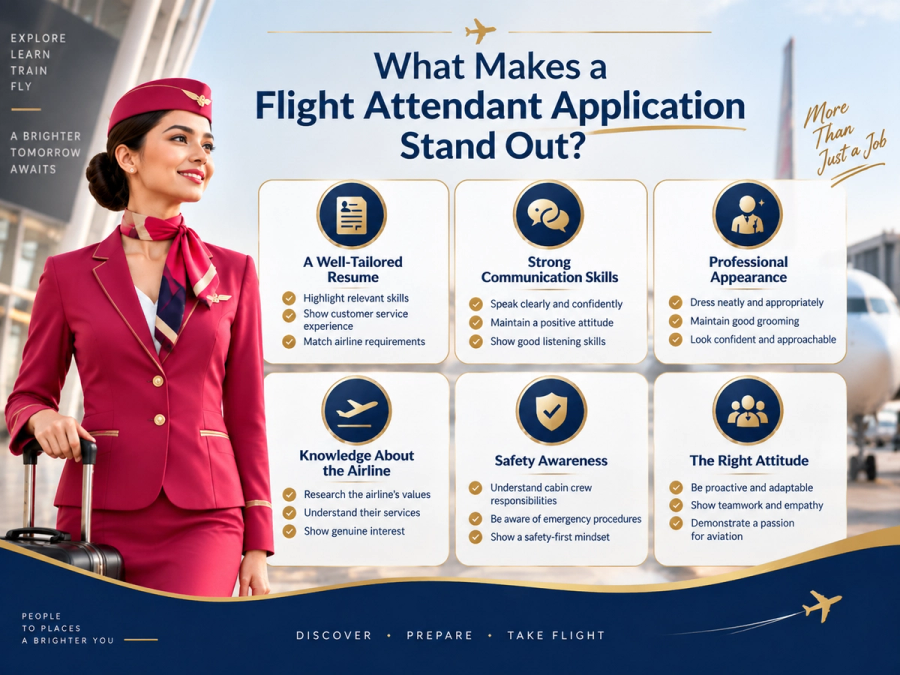
A strong flight attendant application shows recruiters that you have the skills, attitude, and professionalism required to represent an airline.
Airlines generally evaluate candidates based on:
Selection Area What Recruiters Look For
Resume Relevant skills, achievements, communication ability.
Communication Clear speaking, confidence, passenger interaction skills.
Customer Service Ability to handle different passenger situations.
Personality Positive attitude, teamwork, adaptability.
Grooming Professional appearance and presentation.
Interview Skills Confidence and problem-solving ability.
Aviation Knowledge Understanding of safety and cabin crew responsibilities.
A successful candidate is not someone who only looks professional but someone who can demonstrate the qualities required in real cabin crew situations.
How Can I Make My Flight Attendant Resume Stand Out?
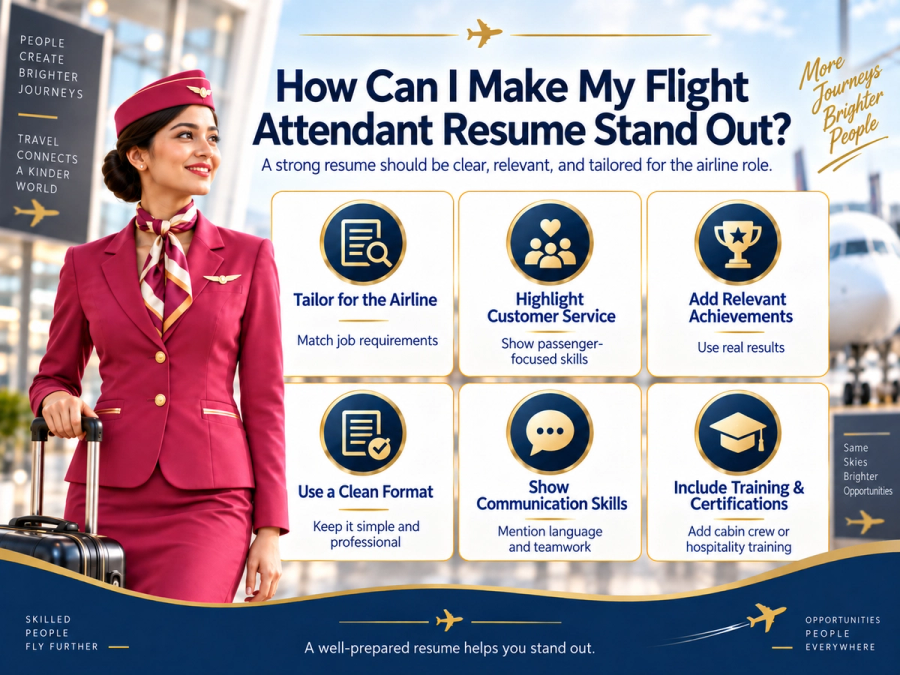
Create an Airline-Specific Cabin Crew Resume
The best way to improve your flight attendant resume is to customise it according to the airline’s requirements instead of sending the same resume everywhere.
Airlines receive thousands of applications, and recruiters often spend only a short time reviewing each resume. A generic resume may fail to highlight why you are suitable for the cabin crew role.
Your resume should include aviation-related skills and experiences that match the job description.
Important Cabin Crew Resume Skills
- Customer service
- Passenger assistance
- Communication skills
- Conflict resolution
- Teamwork
- Problem-solving
- Safety awareness
- Hospitality skills
- Multilingual ability
- Time management
How Should I Write a Cabin Crew Resume Summary?
Your resume summary should immediately explain your strengths and career goal.
Avoid writing:
“I love travelling and want to become a flight attendant.”
Instead, write:
“Motivated aviation aspirant with strong communication skills, customer service abilities, and a passion for delivering excellent passenger experiences. Seeking an opportunity to begin a professional career as a cabin crew member.”
A professional summary helps recruiters quickly understand your suitability for the role.
Should I Add Achievements Instead of Responsibilities in My Resume?
Yes. Airlines prefer candidates who can demonstrate real skills through examples.
Instead of only mentioning duties, highlight results.
Basic Resume Statement Stronger Resume Statement
Handled customers Assisted customers daily while resolving queries professionally
Worked with a team Collaborated with team members to improve customer experience
Managed complaints Resolved customer concerns by using effective communication skills
Provided service Delivered friendly and efficient service in a fast-paced environment
Even freshers can include achievements from internships, college activities, volunteering, hospitality experience, or part-time jobs.
How Important is a Cover Letter for a Flight Attendant Job?
A cover letter allows candidates to explain why they are interested in aviation and why they are suitable for a specific airline.
A good cabin crew cover letter should include:
- Your Interest in Aviation
Explain why you want to become cabin crew beyond travelling.
Example:
“I am interested in aviation because I enjoy interacting with people, working in a multicultural environment, and creating positive experiences for passengers.”
- Your Relevant Skills
Highlight:
- Communication skills
- Customer service experience
- Teamwork
- Adaptability
- Problem-solving abilities
- Why You Want to Join That Airline
Research the airline before applying.
Mention:
- Airline values
- Customer service approach
- Reputation
- Network and destinations
A personalised application shows genuine interest and preparation.
What Skills Do Airlines Look for in Flight Attendant Candidates?
Airlines look for candidates who can communicate effectively, provide excellent passenger service, remain calm under pressure, and handle safety responsibilities professionally.
The most important cabin crew skills include:
Communication Skills
Flight attendants communicate with passengers from different backgrounds every day. Clear and polite communication is essential.
Candidates should practice:
- Speaking confidently
- Improving English communication
- Maintaining eye contact
- Listening actively
- Speaking professionally
Customer Service Skills
Cabin crew members represent the airline brand. They must make passengers feel comfortable while handling different situations.
Important customer service qualities include:
- Patience
- Empathy
- Positive attitude
- Problem-solving
- Professional behaviour
Adaptability
Aviation is a dynamic industry. Flight attendants must adjust to changing schedules, different passengers, and unexpected situations.
How Can I Prepare for a Flight Attendant Interview?
The best way to prepare for a cabin crew interview is to practise common questions, understand the airline, improve communication skills, and prepare examples that demonstrate your abilities.
Common flight attendant interview questions include:
Interview Question What Recruiters Want to Understand
Tell me about yourself Confidence and communication
Why do you want to become cabin crew? Career motivation
Why should we hire you? Self-awareness
How would you handle an angry passenger? Problem-solving ability
What are your strengths? Personality and confidence
What do you know about our airline? Preparation level
How Does the STAR Method Help in Cabin Crew Interviews?
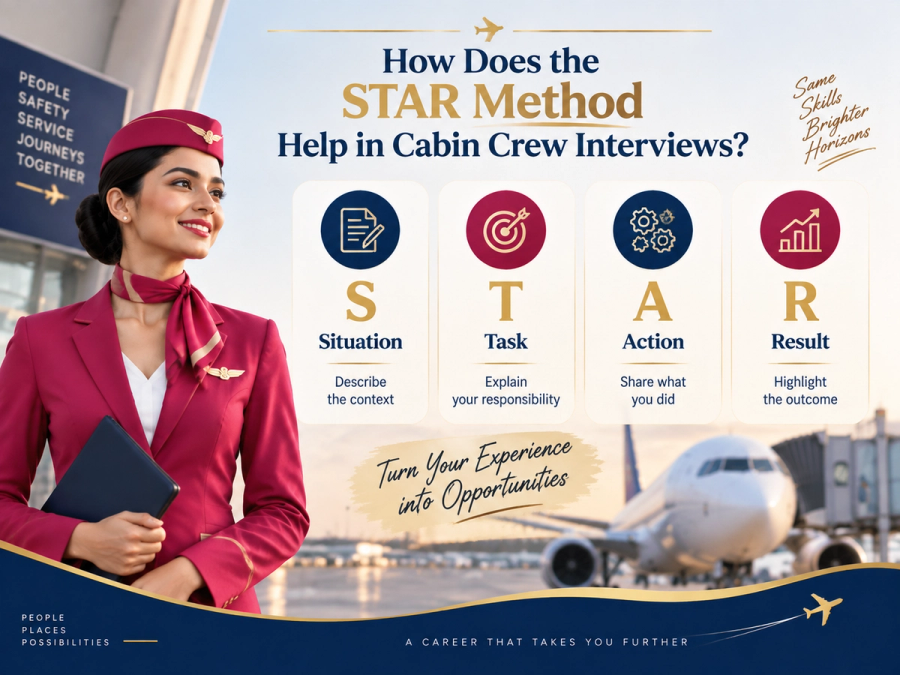
Many airlines ask situation-based questions to understand how candidates react in real-life scenarios.
The STAR method helps candidates structure their answers clearly during cabin crew interviews:
- Situation: Explain the background or context of the situation you experienced.
- Task: Describe your responsibility or the role you had in that situation.
- Action: Explain the steps you took and how you handled the situation.
- Result: Share the outcome or the positive impact of your actions.
Example:
Question: How would you handle an upset passenger?
Situation: A passenger is unhappy because of a delay.
Task: My responsibility is to understand their concern and provide assistance.
Action: I would listen calmly, communicate politely, and provide the available solution.
Result: The passenger feels heard, and the situation is handled professionally.
How to Prepare for a Cabin Crew Interview at Home?
You can prepare for a cabin crew interview at home by practising self-introduction, improving communication skills, researching airlines, preparing interview answers, and conducting mock interviews regularly.
Many candidates think cabin crew interview preparation starts only after receiving an interview call. However, successful candidates usually prepare weeks or months before the recruitment process.
A structured home preparation routine can help improve confidence and reduce interview anxiety.
Step-by-Step Cabin Crew Interview Preparation at Home
- Practise Your Self-Introduction Daily
The first question asked in most cabin crew interviews is:
“Tell me about yourself.”
Your answer should be short, confident, and professional.
Include:
- Your name
- Educational background
- Communication skills
- Interest in aviation
- Career goals
Avoid talking only about travelling. Airlines want candidates who understand that cabin crew is a professional safety and customer service role.
Example:
“Good morning. My name is ________. I have completed my education in ________. I am passionate about aviation and enjoy interacting with people. My communication skills, positive attitude, and willingness to learn motivate me to build a career as a cabin crew professional.”
2. Improve Your English Communication Skills
Strong communication skills are one of the most important requirements for cabin crew selection.
You do not need complicated English. Airlines look for candidates who can communicate clearly, politely, and confidently.
Practise:
- Speaking English for 15–20 minutes daily
- Reading newspapers or aviation-related articles
- Recording your answers and improving pronunciation
- Learning professional phrases used in customer service
Example phrases:
- “How may I assist you?”
- “Thank you for your patience.”
- “I completely understand your concern.”
3. Research the Airline Before Your Interview
A common mistake candidates make is attending interviews without knowing about the airline.
Before your interview, learn:
- Airline history
- Main destinations
- Fleet information
- Company values
- Customer service approach
Possible interview question:
“Why do you want to join our airline?”
A prepared answer should show that you understand the airline and are genuinely interested in becoming part of their team.
4. Practise Cabin Crew Mock Interview Questions
Mock interviews help candidates improve confidence, body language, and answer quality before the actual airline interview.
Practising common questions allows you to answer naturally instead of memorising responses.
How to Crack a Cabin Crew Interview in the First Attempt?
Cracking a cabin crew interview in the first attempt requires proper preparation, confidence, effective communication skills, and a clear understanding of the responsibilities of cabin crew members.
Follow these preparation tips:
3. Understand the Cabin Crew Role
Many candidates think cabin crew is only about hospitality.
However, cabin crew responsibilities include:
- Passenger safety
- Emergency procedures
- Security awareness
- Passenger assistance
- Service delivery
Showing this understanding creates a positive impression.
2. Practise Your Body Language
Recruiters observe:
- Walking style
- Sitting posture
- Eye contact
- Smile
- Confidence
Body Language Tips for a Cabin Crew Interview:
- Maintain an upright posture: Sit straight and present yourself with confidence and professionalism.
- Maintain natural eye contact: Show confidence and attentiveness while speaking with the interviewer.
- Avoid nervous movements: Stay calm and avoid unnecessary gestures, fidgeting, or signs of anxiety.
- Smile professionally: A warm and genuine smile helps create a positive first impression and reflects a friendly personality.
3. Prepare Real Examples
Instead of giving general answers, share examples.
Example:
Instead of:
“I am good at handling people.”
Say:
“During my college event, I managed guest coordination and handled queries from participants, which improved my communication and problem-solving skills.”
Why is Grooming Important for Flight Attendant Selection?
Professional grooming is important because cabin crew members represent the airline’s image and interact directly with passengers.
Recruiters observe:
- Professional appearance
- Body language
- Confidence
- Posture
- Communication style
Grooming tips for cabin crew interviews:
- Wear formal professional attire
- Maintain neat hair
- Keep accessories minimal
- Maintain good posture
- Smile naturally
- Show confidence
Grooming is not about looking perfect. It is about presenting yourself as a disciplined aviation professional.
How Can Freshers Without Experience Get Selected as Cabin Crew?
Many candidates worry that they do not have previous aviation experience.
However, airlines also hire freshers who demonstrate the right skills and attitude.
Freshers can highlight:
- College projects
- Volunteer experience
- Hospitality exposure
- Customer interaction experience
- Language skills
- Leadership activities
The key is to show that you have the qualities required for cabin crew.
How Can Cabin Crew Training Help You Stand Out in Job Applications?
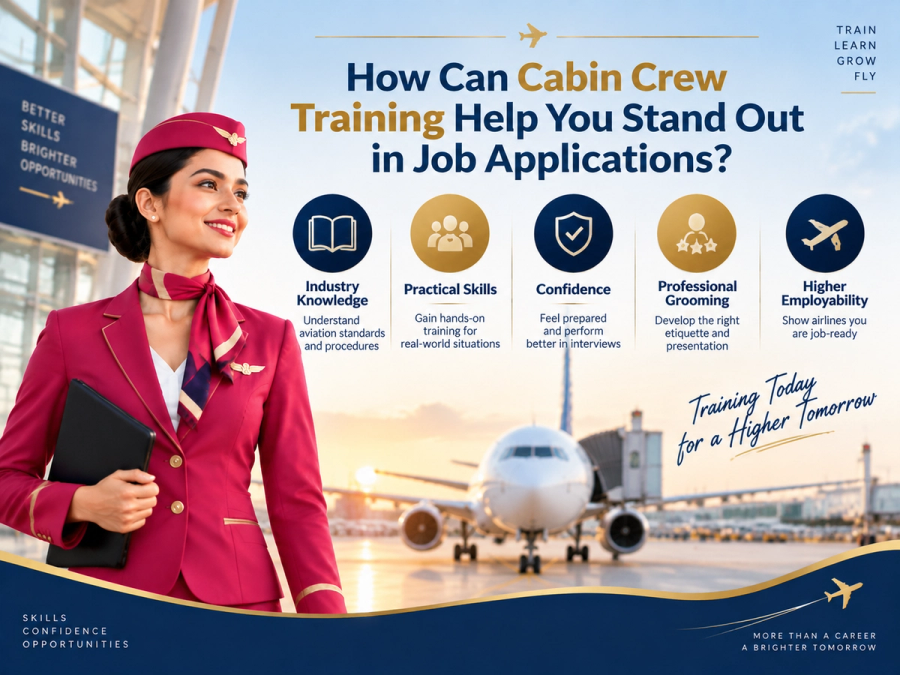
Professional cabin crew training helps aspiring flight attendants develop the skills, knowledge, and confidence required to perform better during airline recruitment processes.
While some airlines provide their own training after selecting candidates, the structure, duration, and compensation policies vary depending on the airline, country, and recruitment programme. Candidates should always check the specific requirements and policies of the airline they are applying to.
A specialised cabin crew training programme can help candidates build a stronger profile by developing essential skills such as:
- Aviation Knowledge: Understanding basic aviation concepts, airline operations, and cabin crew responsibilities.
- Communication Skills: Improving verbal communication, passenger interaction, and professional etiquette.
- Grooming Standards: Developing a professional appearance and the confidence expected in the aviation industry.
- Interview Preparation: Practising airline interview questions, mock interviews, and selection techniques.
- Personality Development: Building confidence, teamwork, problem-solving abilities, and a positive professional attitude.
Completing a cabin crew course does not guarantee airline employment; however, it can help candidates become better prepared, more confident, and more competitive during the flight attendant selection process.
At Vision Institute of Aviation, students receive industry-focused cabin crew training designed to help them develop the skills required to pursue a successful career in aviation.
Common Mistakes to Avoid in Flight Attendant Applications
Many candidates focus only on meeting eligibility criteria, but small mistakes during the application and interview process can affect their chances of selection. Avoiding these common mistakes can help you create a stronger impression on airline recruiters.
Some mistakes candidates should be careful about include:
- Submitting a generic resume: Fails to highlight airline-specific skills, experience, and preparation.
- Focusing only on appearance: Cabin crew selection depends on communication, professionalism, and passenger-handling skills, not just grooming.
- Memorising interview answers: Makes responses sound unnatural and less authentic.
- Not researching the airline: Shows a lack of preparation and genuine interest in the role.
- Ignoring communication skills: Poor communication can affect passenger interaction and service delivery.
- Overlooking safety knowledge: Cabin crew is a safety-focused role, and understanding safety responsibilities is essential.
Why Are Cabin Crew Mock Interviews Important?
Mock interviews help candidates:
- Identify communication gaps
- Improve confidence
- Practise professional answers
- Understand interview expectations
- Improve body language
At Vision Institute of Aviation, interview preparation focuses on helping aviation aspirants develop the confidence, communication ability, and professional approach required for airline recruitment.
Start Your Cabin Crew Career Preparation with Vision Institute of Aviation
A successful flight attendant career begins with proper preparation, professional training, and the right guidance.
Airlines are looking for candidates who can represent their brand, communicate confidently, handle passengers professionally, and understand the responsibility of aviation safety.
Vision Institute of Aviation helps aspiring aviation professionals develop the skills required to enter the aviation industry through structured training, personality development, communication improvement, grooming guidance, and interview preparation.
Begin your aviation journey with Vision Institute of Aviation today.
Visit us:Admission Office/Ground ClassesF-647, Palam Extension, Sector 7, Dwarka,New Delhi – 110075
Call: +91 931 919 3605
Email us at office@visioninstituteofaviation.com