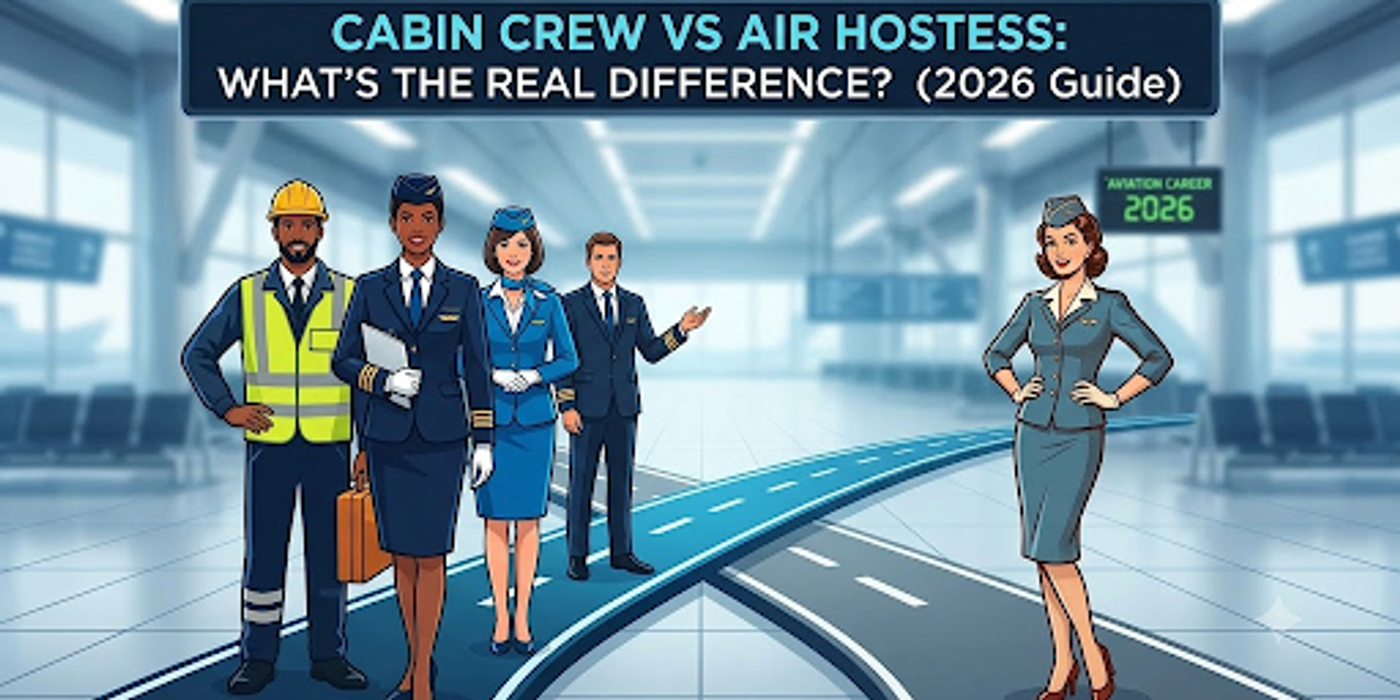
Cabin Crew vs Air Hostess: Difference, Meaning & Salary (2026)
Air hostess vs cabin crew. What's the real difference? Cabin crew meaning, eligibility, and a full cabin crew vs air hostess salary comparison for 2026.
In case you are investigating your options in the field of aviation, you have likely used both 'air hostess' and 'cabin crew' while typing in Google in one breath and got puzzled with the results that give you inconsistent information regarding their equality. Actually, they are. The difference between cabin crew vs air hostess is not in their different responsibilities, salaries or career opportunities, it lies in time.
The article below gives you complete understanding of the distinction between cabin crew and air hostess in terms of eligibility, salary, growth, and most importantly – which one is the right choice for your resume and interviews. In case you've stumbled upon this comparison trying to find out which option to choose between cabin crew vs air hostess , the answer is clear, there's just one option. What really counts is how ready you are for it.
Cabin Crew vs Air Hostess: Quick Answer
There is no difference in the job itself. Air hostess" was the earlier female-specific term for cabin crew used in the Indian aviation industry till the 1990s. "Cabin crew" is the contemporary gender-neutral term recognised by the DGCA and ICAO for all airlines in India today. IndiGo, Air India, Akasa Air, SpiceJet, Vistara, for everyone in flight, regardless of whether they are male or female. The only change is the name.
When you apply for a position with an airline now, it will be "cabin crew" on the application form. "Air hostess" is what your parents and Google call it.
Understanding the Terms: Air Hostess vs. Cabin Crew
What Is a Cabin Crew?
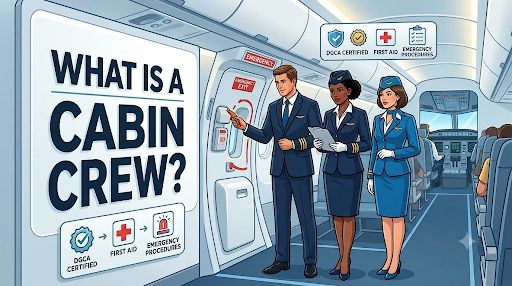
Cabin crew is a term used to denote professional personnel trained and licensed by the DGCA for ensuring the safety of passengers and providing on-board services on board a commercial aircraft. To answer the question ‘what is cabin crew’ in very simple language, this is just the formal name for the term ‘air hostess or steward’ which is commonly used in India for this occupation.
The two terms – air hostess and cabin crew refer to the same profession. Cabin crew definition encompasses all individuals on board an aircraft, including flight attendants, senior crew members, pursers, and in-flight managers. The term ‘air hostess’ applied exclusively to flight attendants who are female.
What Is an Air Hostess?
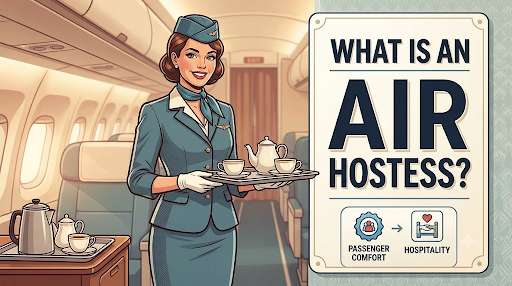
An air hostess is a dated term used to refer to a flight attendant, a female who is trained to offer in-flight passenger services. In asking what is an air hostess, you will discover that it is the same occupation as that of a flight attendant, only that the latter has a more modern definition.
The title got popular in India owing to decades of airline marketing in India, where airlines advertised their airlines with the female flight attendants. This was at a time when most of the roles of flight attendants were taken up by females. What sets apart this air hostess meaning from the cabin crew one is the fact that it does not cover the safety aspects of the job, which have been part of every air hostess job role. Even in the 20th century, flight attendants were also trained in safety and first aid procedures and had to be certified as such.
That means that if in 2026, someone asks what is an air hostess: she will still be a female flight attendant but with the same DGCA certification.
Why This Question Keeps Coming Up
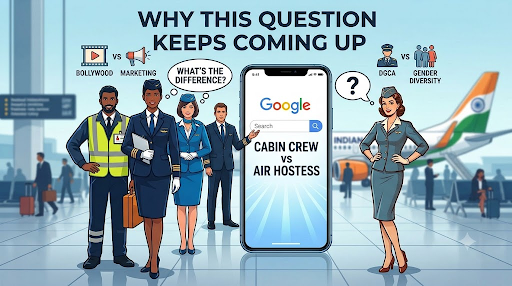
Each year, thousands of 12th pass graduates Google "air hostess course" while looking to become cabin crew members. There is no mistake here; it is simply an outcome of the terminology which formed the Indian popular culture for four decades but left the profession itself far behind.
What makes understanding the difference interesting and informative: the terminology difference reflects the development of the profession itself: it was once a hospitality-related occupation almost exclusively occupied by women, and now it is a crucially important DGCA-controlled profession.
It is much more relevant than it might seem at first glance, especially when speaking about your resume and training program. More details later.
The History Behind Both Terms: Cabin Crew and Air Hostess
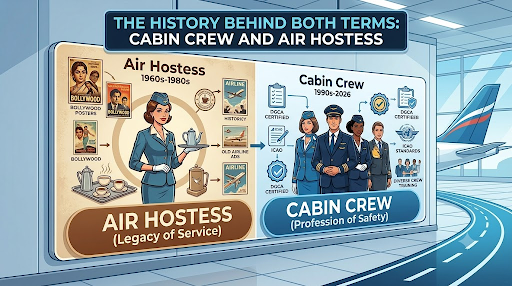
A Brief Look at Both Terms' Histories
The term "air hostess" came to be in the early years of the commercial flights, when the in-flight service was performed only by girls and was centered on hospitality - providing food, handling passenger comfort, and giving good face to the airline. The term has remained relevant in India due to the impact of Bollywood movies, TV shows, and decades-long marketing campaigns of Indian airlines, making it still more often used in searches despite the fact that it is no longer a professionally correct term.
As the aviation industry evolved, the term "cabin crew" appeared, replacing "air hostess" because airlines have begun recruiting males in this role and the task of ensuring passengers' safety has become the regulatory focus of the position rather than its previous service orientation. Now it is the official name of the position according to DGCA Civil Aviation Requirements, ICAO safety standards and any airline's recruitment advertisement.
What is important here is that the cabin crew are considered safety personnel first and service personnel next. This is reflected in the primary responsibilities: ensuring the safety of the passengers - their evacuation, providing first aid, controlling fires, and other safety-related.
Cabin Crew vs Air Hostess: Full Comparison Table
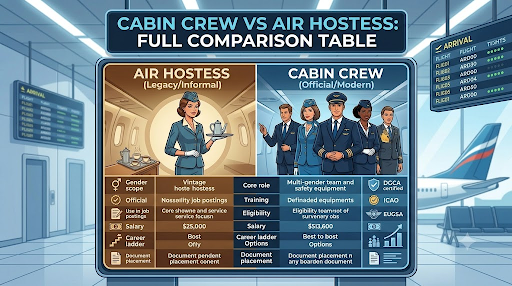
Here's the complete air hostess vs cabin crew breakdown, side by side:
Parameter Air Hostess Cabin Crew
Gender scope Female only All genders
Official status Informal, legacy term Official term used by DGCA, ICAO, and all Indian airlines
Used in job postings? No Yes — every Indian carrier
Core role framing In-flight hospitality/service Safety-certified in-flight professional (service included)
Training required Same as cabin crew DGCA-mandated: safety & emergency procedures, first aid, CRM, security, aircraft-type modules
Eligibility Same as cabin crew 10+2 pass, 18–27 yrs (fresher), height/BMI/medical criteria
Salary Identical — term has no bearing on pay Same
Career ladder Same progression Trainee → Cabin Crew → Senior Crew → Purser → In-flight Manager
Domestic vs International options Not term-specific Crew can specialise in either track (see below)
Which one appears on your offer letter Never Always
The takeaway on the cabin crew vs air hostess difference: this isn't a "which is better" comparison — it's one job with two names from two different eras. Everything below applies equally, whichever word brought you here.
Eligibility Criteria: The True Checklist (2026)
This is how things look across most airlines in India. While individual airlines might differ slightly, international airlines such as Emirates, Qatar Airways, and Etihad usually have additional eligibility criteria.
- Education: 10+2 pass in recognised board examinations (some airlines insist on a certain minimum aggregate)
- Age: Generally between 18 and 27 for freshers; can be as high as 35 if the candidate already has some experience as cabin crew member
- Height: Around 155 cm+ for women, 170 cm+ for men (this varies depending upon the airline)
- BMI/weight: Proportional to height, within limits set by the airline
- Medical fitness: Medical fitness as per DGCA guidelines, including good eyesight and hearing
- Appearance: No visible tattoos while in uniform (this differs from airline to airline and is getting less stringent for international airlines)
- Language skills: Fluency in English and Hindi; additional language skills come in handy, particularly if the route involves an international destination
- Swimming proficiency: This one's often essential for water landing, and a point that gets totally overlooked by all comparative articles
Comparison: Cabin Crew vs Air Hostess Salary - Full Breakdown
Quick answer to the question of air hostess vs cabin crew salary difference: There is no such thing as different pay scales for these professions. It all depends on the airline and experience level – not the name you chose to look for it. Rough indicative ranges of monthly income, subject to variations between airlines (the figures change from year to year, so make sure to check the current data when applying):
Career Stage Domestic Carriers International/GulfCarriers
Fresher ₹25,000 – ₹50,000 ₹1,50,000 – ₹2,50,000+
(tax-free, often with housing)
3–6 years experience ₹60,000 – ₹90,000 ₹2,00,000 – ₹3,00,000+
Senior Crew / Purser ₹90,000 – ₹1,25,000+ ₹3,00,000+
As can be seen, packages offered by international airlines also include free/subsidized accommodation, layover allowance and tax-exemption – hence, the reason why most cabin crew of Indian airlines tend to switch to Gulf and Southeast Asian airlines in several years of domestic flying experience.
Domestic vs International Cabin Crew: Which Track Should You Choose?
It is the one comparison that gets completely overlooked in all "cabin crew vs air hostess" debates, and probably the most relevant one to an aspiring cabin crew member.
Domestic cabin crew (IndiGo, Air India, SpiceJet, Akasa Air)
- Shorter routes, quicker career growth, easier language requirements
- Great way to start for people who plan to work for international carriers in future
- More flights, better scheduling
International cabin crew (Emirates, Qatar Airways, Etihad, long haul services of Air India)
- Way higher salary and tax-free compensation package
- Greater fluency in English, sometimes another language, along with better presentation during the interview
- Lots of traveling, longer layovers but tougher selection criteria
Almost all international cabin crew members in India have been through their domestic counterparts' shoes, have trained well enough, and progressed from there. That is the reason why the standard of your training program is more important than the word you chose to look it up with.
Which Term Should You Actually Use? Cabin Crew vs Air Hostess
The following aspect is not commonly touched upon, although it may impact your overall presentation:
- Resume/CV: Use "Cabin Crew" every single time. This is because it indicates an understanding of the profession as it currently exists.
- Interview: Should you get the question "Why do you want to be an air hostess?" you can use the term, but make sure that your answer focuses on the important aspects of cabin crew – safety and professionalism, which interviewers appreciate.
- Social situation: "Air hostess" is not offensive at all – it is simply out of date. No one would judge you for calling flight attendants by this name.
- When looking for training: Use either of the terms, but make sure you apply to institutes that provide the actual training needed by airlines – safety-related DGCA certification.
Career Growth Path
Stage Typical Experience What Changes
Trainee Cabin Crew 0–2 years Initial certification, safety qualification, aircraft-type training
Cabin Crew 2–3 years Full line flying, service + safety responsibilities
Senior Cabin Crew 3–6 years Mentors junior crew, handles complex situations
Purser / Lead Crew 6–10 years In-charge of cabin operations, liaises with cockpit crew
In-flight Manager 10+ years Oversees multiple crews, involved in training and policy
Besides flight duties, senior crew may switch over to jobs such as training, recruitment, cabin service planning, or safety compliance in an airline, where it does not matter whether you used to call yourself air hostess or cabin crew.
Industry Outlook by 2026
India has emerged as one of the fast-growing aviation sectors in the world, and there is a greater demand for cabin crew than any other job in the aviation sector because of the expanding domestic fleet of airlines. The problem that airlines are facing now is not that of insufficient number of applications but of lack of training-ready candidates – people trained on safety processes, DGCA requirements, and interviewing process.
How to Actually Become One
It doesn’t matter which term brought you here; the process remains the same:
- Ensure you qualify as per the eligibility list stated above.
- Join a training program that offers more than grooming skills, i.e. safety and emergency procedures training as per DGCA standards, first aid, as well as practice interviews/mock-panel interviews.
- Establish whether you want to join domestic or international airlines from the beginning, as your language and interview skills need to match the same.
The Vision Institute of Aviation’s Cabin Crew program fills exactly this gap. It offers DGCA training, tracks that are specific for either domestic or international candidates, real practice interviews and grooming, and even placement support included in the course.
Explore the Cabin Crew course →
Frequently Asked Questions On Cabin Crew vs Air Hostess
What is cabin crew?
DGCA-approved airline professionals of any gender whose job is to take care of passenger safety and services during the flight. It is an official name that was adopted in place of the term "air hostess."
Are cabin crew and air hostess the same thing?
Yes, same training, same eligibility requirements, same salaries, same career opportunities – "air hostess" is the traditional name for the female version of this job.
What is the difference between cabin crew and air hostess?
There is no difference – the difference between cabin crew and air hostess is just terminology and scope of the terms.
Why are the airlines no longer using the term "air hostess"?
Because it is gender-specific and does not reflect the fact that the job title is considered a type of safety personnel and is open to all genders. "Cabin crew"
Can men join cabin crew in India?
Yes. Men are recruited by all the major airlines in India in the cabin crew cadre. "Air hostess" historically was the terminology for women, while "cabin crew" is neutral.
Does it make any difference for my job application?
On your CV or during an interview, stick to the term "cabin crew" to prove that you have knowledge about the profession. "Air hostess" will not disqualify you but sounds a bit outdated.
What is the minimum educational qualification for cabin crew?
Pass in 10+2 examination from a recognized board, generally aged between 18 to 27 years for freshers along with height, BMI, and other criteria of health and fitness prescribed differently by each airline.
Is it true that cabin crew salaries in international airlines are 3 times higher than the salaries of cabin crew in Indian domestic airlines?
Yes. In many